

A Door Thrown Open into History
On 21 September 2022, on the initiative of the Ministry of Culture and Sports of the Republic of Kazakhstan and under the coordination of the Committee for Archives and Documentation Management, the republican project “The Archive and the Future Generation” was held in all of the country’s state archives as part of the Year of Children.
As part of the event, an open house day was organized at the National Archive of the Republic of Kazakhstan, attended by students and schoolchildren from L. N. Gumilyov Eurasian National University; the military college (“Zhas Ulan”) named after Hero of the Soviet Union, People’s Hero, and General of the Army Sagadat Nurmagambetov of the Ministry of Defense of the Republic of Kazakhstan; the higher college of the Eurasian Humanitarian Institute; the Al-Farabi Palace of Schoolchildren; School-Lyceum No. 76 named after Alikhan Bokeikhan; School-Lyceum No. 59 and School-Lyceum No. 66 of the Astana city akimat; and the Nazarbayev Intellectual School, more than 500 teenagers in all.
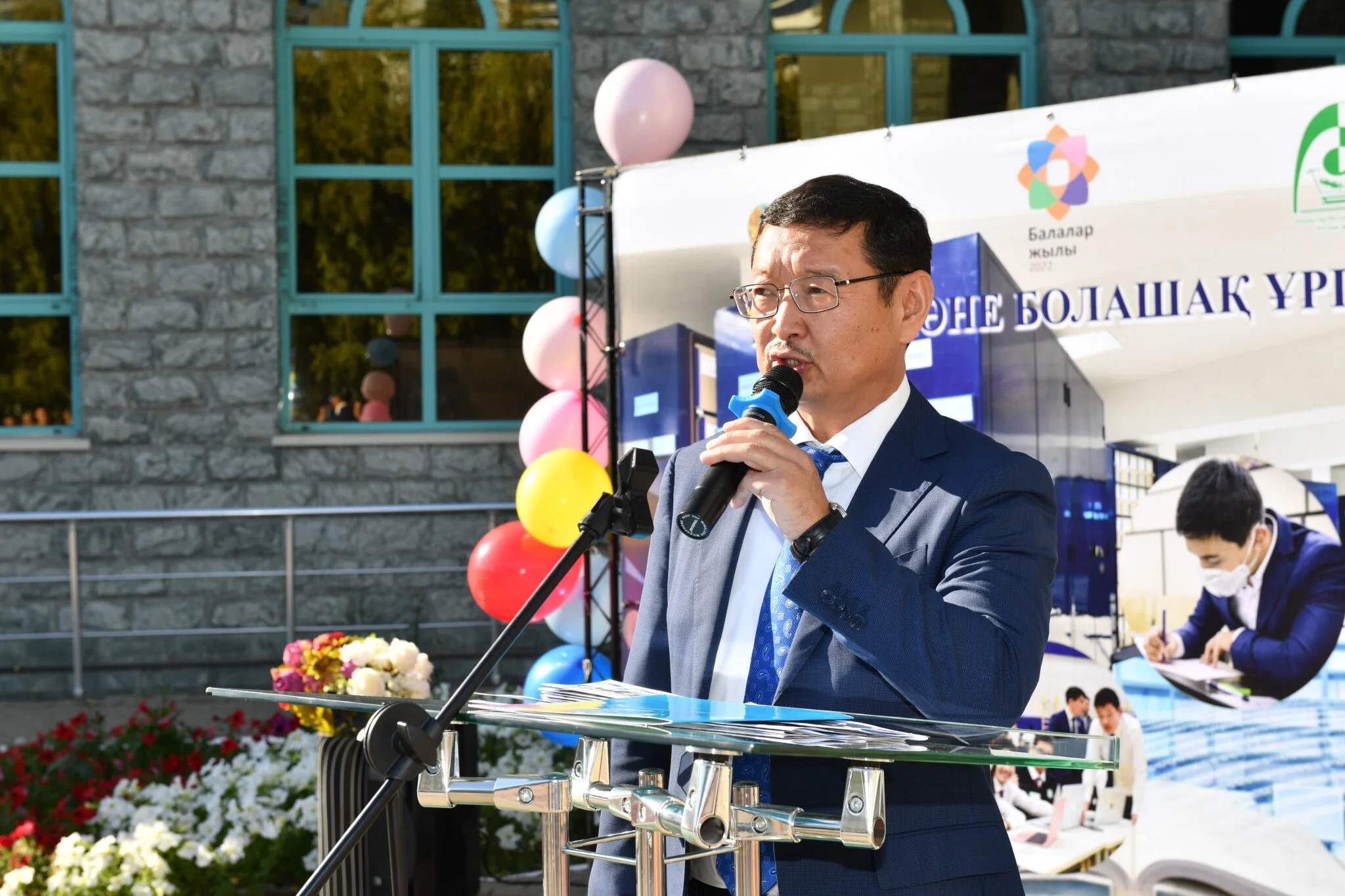
The ceremonial opening of the open house day was attended by Kuat Borash, Chairman of the Committee for Archives and Documentation Management of the Ministry of Culture and Sports of the Republic of Kazakhstan; Deputy Chairman Gulzira Karsakbayeva; Saltanat Tashchanova, Head of the Department of State Policy and Regulatory Legal Regulation; and Sagila Nurlanova, Director of the National Archive of the Republic of Kazakhstan.
“The main goal of the open house day, organized for the first time within the walls of the National Archive, is, within the ‘Year of Children’ declared by Head of State Kassym-Jomart Kemelevich Tokayev, to acquaint children with archival documents, draw the young generation to knowledge of the nation’s history, and promote it comprehensively. Today our republic has more than 200 republican and regional archives. All of them, right now, at this very moment, are giving young people like you the opportunity to get acquainted with archival work and are holding an open house day,” noted Kuat Kakharmanovich.
Next to speak was Sagila Yesimseitovna, Director of the National Archive of the Republic of Kazakhstan, who, speaking of the event’s importance, revealed to the students the role of the archive in the life of the country.
“As you know, Head of State Kassym-Jomart Tokayev declared this year the ‘Year of Children.’ ‘The child is our future.’ And the future is unthinkable without history. The history that leads to that bright future is kept in the repositories of all the country’s archives, such as this National Archive in which we stand.
Every sheet of a document and every single relic lying in the depths of ancient history is a priceless treasure for us. That is why archives operate in our country, which keep such treasures, bring them into scholarly circulation, and make them the inheritance of tomorrow,” noted S. Yesimseitovna.
According to her, at first glance an archive looks like a quiet, still building, but inside it work is boiling. To preserve each historical document, archivists devote all their will and strength and labor tirelessly, straining their eyes. A document accepted into the archive passes through the hands of many specialists, is registered, bound, placed in special places, and stored in repositories where humidity and temperature are regulated every moment.
“So that you too may know about this difficult and interesting work of making and shaping history and take it to heart, we are organizing an open house day at the National Archive and giving young people like you the chance to enter such institutions freely and become thoroughly acquainted with the work, history, and relics there,” concluded Sagila Nurlanova.
After the ceremonial opening, schoolchildren and students divided into groups and viewed the exhibition, from ancient maps to an exhibit devoted to the famine disaster of the 1920s and 1930s. They also viewed the very first documents of independence and photographs of Astana’s world-famous buildings at the time when they were only beginning to be built.
They also stopped at various “stations,” “Acceptance of National Archive Documents,” “Storage of Documents,” and “Restoration of Documents,” and saw with their own eyes how documents arriving at the archive are accepted, how damaged documents are restored, and how the repositories where they are kept then work, and were delighted.
The visitors were then shown various scholarly and educational collections published by the National Archive’s Publishing Department and the journal “Qazaqstan arkhivteri” (“Archives of Kazakhstan”).
Seeing the children’s interest in history as they viewed the original of the first Constitution of the Republic of Kazakhstan, one of the National Archive’s most valuable documents, the archive staff could not hide their joy. The youngsters put on special gloves to touch this historic document, lined up, and competed to take photographs. They said it was one of the most interesting excursions of their lives and thanked the archivists.
In addition, the open house participants were shown a documentary film about the archive’s work, which became an indispensable tool for deepening further the understanding they had gained of the archive.
Because the open house day lasted all day, the stream of schoolchildren and students wanting to see the archive did not subside until evening. It is not hard to understand from the way they shared their impressions with one another and competed to film that the day was very useful to them.
It should be recalled that, by the ministry’s decision, the open house day is planned to be held every year; this event will undoubtedly help the young generation absorb the testament of their ancestors, not remain indifferent to their history, and grow up as patriots of their country.